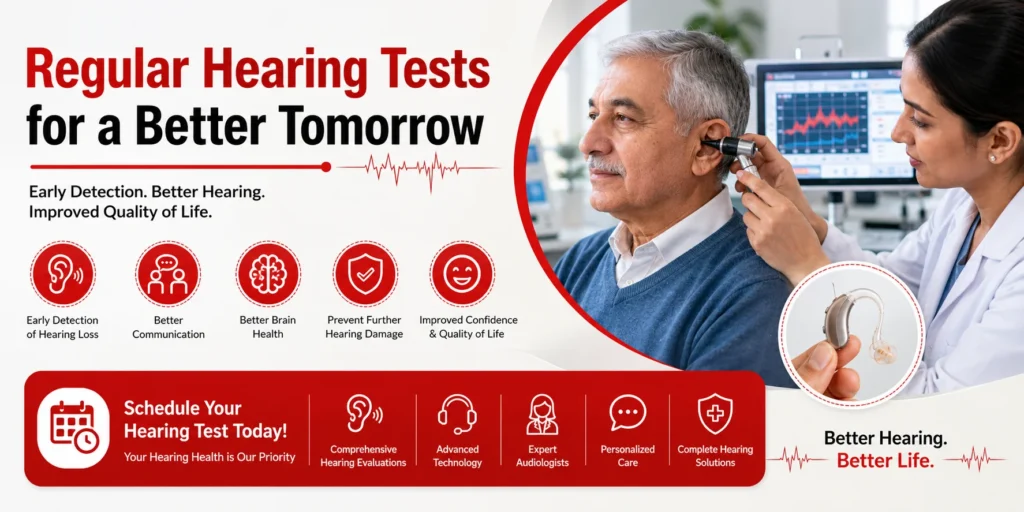
Hearing plays a vital role in our daily lives, allowing us to communicate, work efficiently, enjoy entertainment, and stay connected with family and friends. However, hearing loss often develops gradually, making it difficult to recognize the early warning signs. Many people ignore minor hearing problems until they begin affecting their personal and professional lives.
According to hearing health experts, early diagnosis and treatment can significantly improve hearing outcomes and quality of life. If you’re experiencing even mild hearing difficulties, visiting a qualified audiologist can help identify the problem before it becomes severe.
At Sonakshi Speech & Hearing Aid Clinic, experienced audiologists provide comprehensive hearing evaluations, advanced digital hearing aids, speech therapy, and personalized hearing rehabilitation for patients of all ages.
What Is Hearing Loss?
Hearing loss is the partial or complete inability to hear sounds in one or both ears. It can occur gradually over several years or suddenly due to illness or injury.
Hearing loss generally falls into three categories:
Conductive Hearing Loss
Occurs when sound cannot travel properly through the outer or middle ear due to earwax, infections, or damage.
Sensorineural Hearing Loss
Caused by damage to the inner ear or auditory nerve. This is the most common type and is often permanent.
Mixed Hearing Loss
A combination of conductive and sensorineural hearing loss.
Regardless of the type, early diagnosis is essential for effective treatment.
Why Early Detection Matters
Many people believe hearing loss is simply a part of aging. While age-related hearing decline is common, untreated hearing loss can lead to:
- Communication difficulties
- Social isolation
- Reduced workplace productivity
- Increased stress and anxiety
- Relationship problems
- Listening fatigue
- Reduced confidence
- Cognitive decline in older adults
Seeking professional help early can prevent many of these complications and improve long-term hearing health.
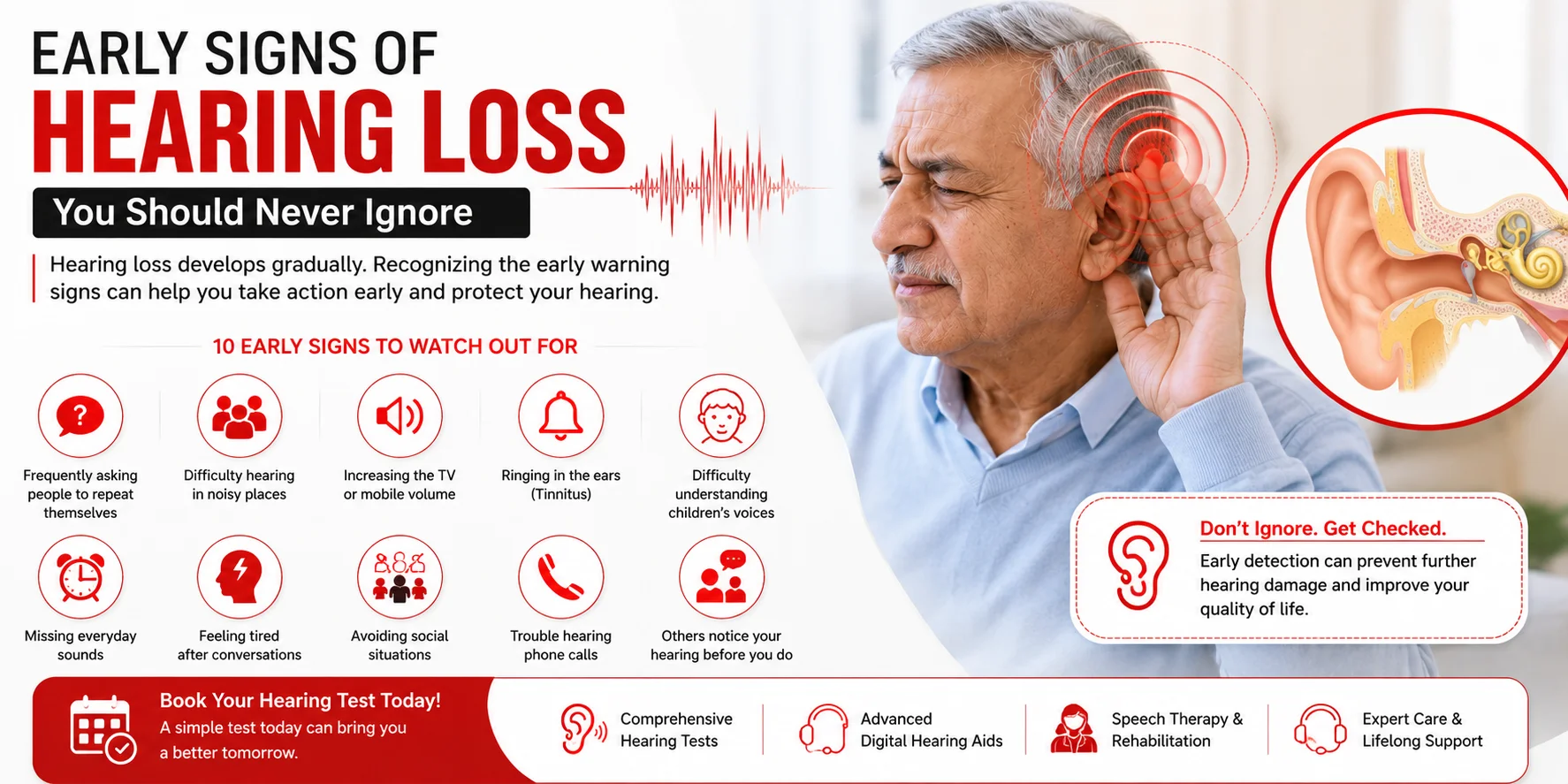
10 Early Signs of Hearing Loss You Should Never Ignore
1. Frequently Asking People to Repeat Themselves
One of the earliest signs of hearing loss is constantly asking:
- “Can you repeat that?”
- “What did you say?”
- “Could you speak louder?”
If conversations become increasingly difficult, it may indicate reduced hearing ability.
2. Difficulty Hearing in Noisy Places
Do you struggle to understand conversations in restaurants, shopping malls, family gatherings, or offices?
Background noise often makes hearing loss more noticeable because damaged hearing cannot easily separate speech from surrounding sounds.
3. Increasing the TV or Mobile Volume
If your family frequently complains that your television or smartphone volume is too loud, it could be a warning sign.
Many people adjust the volume gradually over time without realizing their hearing has changed.
4. Ringing in the Ears (Tinnitus)
Persistent ringing, buzzing, hissing, or whistling sounds in the ears may indicate hearing damage.
Although tinnitus has several causes, it is commonly associated with hearing loss and should never be ignored.
5. Difficulty Understanding Children’s Voices
Higher-frequency sounds are often the first to become difficult to hear.
If children’s voices sound unclear or difficult to understand, you should schedule a professional hearing evaluation.
6. Missing Everyday Sounds
You may begin missing sounds like:
- Doorbells
- Alarm clocks
- Phone notifications
- Microwave timers
- Birds chirping
- Running water
Missing common environmental sounds often indicates gradual hearing decline.
7. Feeling Exhausted After Conversations
Listening with hearing loss requires extra concentration.
Many people experience mental fatigue after meetings, family gatherings, or long conversations because their brain works harder to understand speech.
8. Avoiding Social Situations
People with untreated hearing loss often avoid:
- Family gatherings
- Business meetings
- Parties
- Restaurants
- Social events
This happens because following conversations becomes frustrating and stressful.
9. Trouble Hearing Phone Calls
Phone conversations remove visual cues like facial expressions and lip movements.
If you often struggle to understand callers even with good network quality, your hearing should be evaluated.
10. Others Notice Your Hearing Before You Do
Friends and family often recognize hearing loss before the affected person.
If loved ones mention that you:
- Speak too loudly
- Miss conversations
- Ignore questions
- Misunderstand words
it’s worth scheduling a hearing test.
Common Causes of Hearing Loss
Several factors contribute to hearing problems, including:
Age-Related Hearing Loss
Natural aging gradually affects hearing sensitivity.
Loud Noise Exposure
Working in noisy environments or listening to loud music for extended periods can permanently damage hearing.
Ear Infections
Untreated infections may temporarily or permanently affect hearing.
Earwax Blockage
Excessive earwax can block sound from reaching the eardrum.
Genetics
Some hearing conditions run in families.
Medical Conditions
Diabetes, high blood pressure, and certain autoimmune disorders may increase the risk of hearing loss.
Certain Medications
Some medications can affect hearing as a side effect.
When Should You Visit an Audiologist?
Don’t wait until hearing loss becomes severe.
Consult an audiologist if you experience:
- Difficulty hearing conversations
- Ringing in the ears
- Sudden hearing loss
- Balance problems
- Ear pain
- Frequent ear infections
- Muffled hearing
- Difficulty understanding speech
Professional evaluation can identify the cause and recommend the most appropriate treatment.
How Hearing Loss Is Diagnosed
At a professional hearing clinic, your audiologist may perform:
Pure Tone Audiometry (PTA)
Measures your hearing ability across different sound frequencies.
Speech Audiometry
Evaluates how well you understand spoken words.
Tympanometry
Assesses middle ear function and eardrum movement.
Otoacoustic Emissions (OAE)
Tests inner ear health, especially useful for infants and young children.
These painless tests help determine the type and severity of hearing loss.
Treatment Options for Hearing Loss
Treatment depends on the underlying cause.
Digital Hearing Aids
Modern hearing aids improve speech clarity while reducing background noise. Many models include Bluetooth connectivity, rechargeable batteries, and automatic sound adjustment.
Hearing Aid Programming
Professional fitting ensures your hearing aid matches your specific hearing needs for maximum comfort and performance.
Speech Therapy
Speech therapy may be recommended for children or adults with communication difficulties related to hearing loss.
Medical Treatment
Some hearing conditions, such as ear infections or wax buildup, can be treated medically.
Tips to Protect Your Hearing
Preventing hearing damage is easier than treating it. Follow these simple habits:
- Keep headphone volume below 60%.
- Wear ear protection in noisy workplaces.
- Avoid prolonged exposure to loud sounds.
- Give your ears regular breaks from noise.
- Never insert cotton buds or sharp objects into your ears.
- Treat ear infections promptly.
- Schedule regular hearing checkups.
- Consult an audiologist if you notice changes in your hearing.
Healthy hearing habits can help preserve your hearing for years to come.
Why Choose Sonakshi Speech & Hearing Aid Clinic?
Choosing the right hearing care provider makes a significant difference in diagnosis, treatment, and long-term results.
Sonakshi Speech & Hearing Aid Clinic offers:
- Comprehensive hearing evaluations
- Experienced audiologists
- Advanced digital hearing aids
- Hearing aid fitting and programming
- Hearing aid repair and maintenance
- Pediatric hearing assessments
- Speech therapy services
- Personalized hearing rehabilitation
- Ongoing patient support
The clinic is committed to providing customized hearing solutions that improve communication, confidence, and overall quality of life.
Conclusion
Hearing loss often develops slowly, making it easy to overlook the early warning signs. Symptoms such as difficulty understanding conversations, increasing the TV volume, ringing in the ears, or avoiding social situations should never be ignored. Early diagnosis and timely treatment can help preserve your hearing, improve communication, and enhance your overall quality of life.
If you’re experiencing any signs of hearing loss, Sonakshi Speech & Hearing Aid Clinic offers expert hearing assessments, advanced digital hearing aids, speech therapy, and personalized hearing care. With experienced audiologists and state-of-the-art technology, the clinic is dedicated to helping you hear better and live more confidently.